
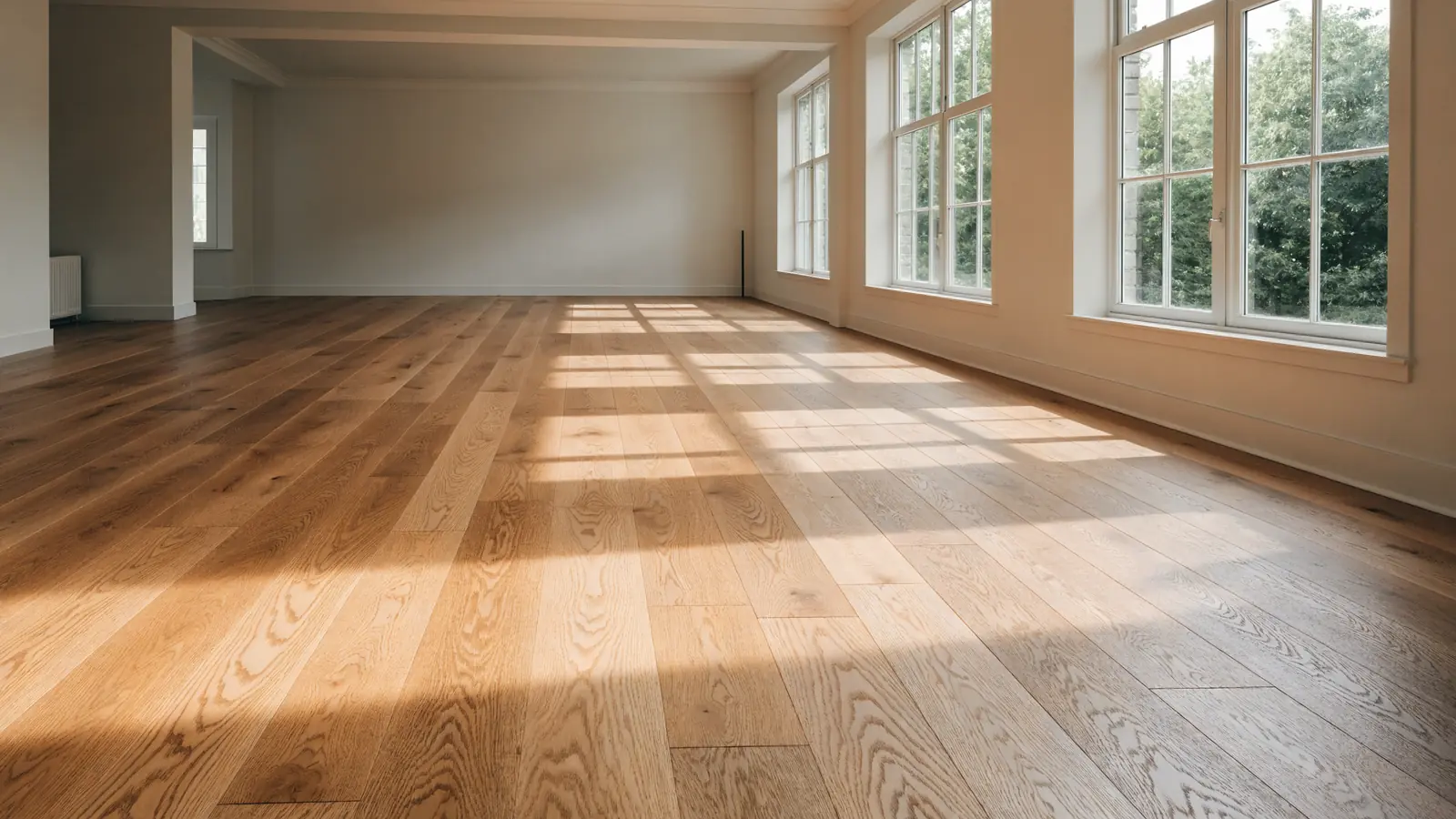
Floor Repair and Replacement in Savannah, GA | Water and Subfloor Damage Experts
Floor deterioration in coastal properties almost always originates below the visible surface. A soft area underfoot, a cupped board, or a lifting plank is a symptom rather than the problem itself. We diagnose the underlying cause before quoting any remediation work.
Water is responsible for the overwhelming majority of the deterioration we are called to investigate. Burst supply lines, failed appliance hoses, storm intrusion, and slow leaks beneath dishwashers all conclude identically. The finished floor fails visibly while the substrate underneath has been deteriorating for months.
Repairing the visible surface without remediating the substrate simply reschedules the identical failure. We open the affected area, establish the moisture source, and dry the structure properly. Only then does replacement material go down over a substrate we would genuinely stand behind.
Not every damaged floor requires complete replacement, and we will say so at the assessment. Individual boards and planks replace successfully where the surrounding installation remains sound. Matching material is the practical constraint, particularly where the original product has been discontinued.
Subfloor reconstruction is frequently the real work, and it is invisible once the flooring returns. Deteriorated decking is cut out and replaced, loose panels are refastened, and joists are inspected. Crawl space properties across the islands need this considerably more often than mainland construction.
We repair and replace throughout Savannah and Chatham County, including insurance and property management work, and every assessment includes moisture readings rather than a visual opinion. We are licensed & insured throughout Georgia and provide certificates on request.
Licensed & Insured · 50+ years experience
Request A Free Quote!
Tell us what you need. We reply the same working day.
Soft spot underfoot? Book a free damage assessment across Savannah.
912-330-6990Why We are the Best flooring contractor in Savannah, GA
Selecting a flooring contractor ultimately comes down to who actually shows up. It also comes down to who stands behind the installation afterward. We have installed flooring throughout Chatham County for over 50 years. The same crew handles your project from initial measure through final walkthrough. Subcontracted installation is where most flooring complaints originate, so we simply do not operate that way.
- Over 50 years delivering flooring installation, repair, and maintenance across residential and commercial properties throughout the region
- Full-service solutions including luxury vinyl plank, solid hardwood, engineered wood, porcelain tile, laminate, and broadloom carpet
- Skilled craftsmanship using precise installation methods including floating click-lock assemblies, full-spread glue-down, and traditional blind-nailed hardwood
- High-quality materials and factory-cured finishes selected to improve durability, appearance retention, and long-term dimensional performance
- Custom design options covering plank direction, seam placement, transition detailing, and stair treatments to match any interior
- Low-VOC adhesives and underlayment systems available on request for occupied residences, medical clinics, and sensitive environments
Get a written price for your floor repair project
Send us the rooms and the approximate square footage and we will schedule a free in-home measure. You receive one written number covering material, labor, subfloor preparation, and disposal of the existing floor. That figure does not move afterward unless demolition exposes structural damage nobody could reasonably have anticipated.
- Free in-home measure with no obligation
- Licensed & Insured throughout Georgia
- 50+ years installing across Chatham County
Request A Free Quote!
Tell us what you need. We reply the same working day.
Types of Floor Damage We Repair
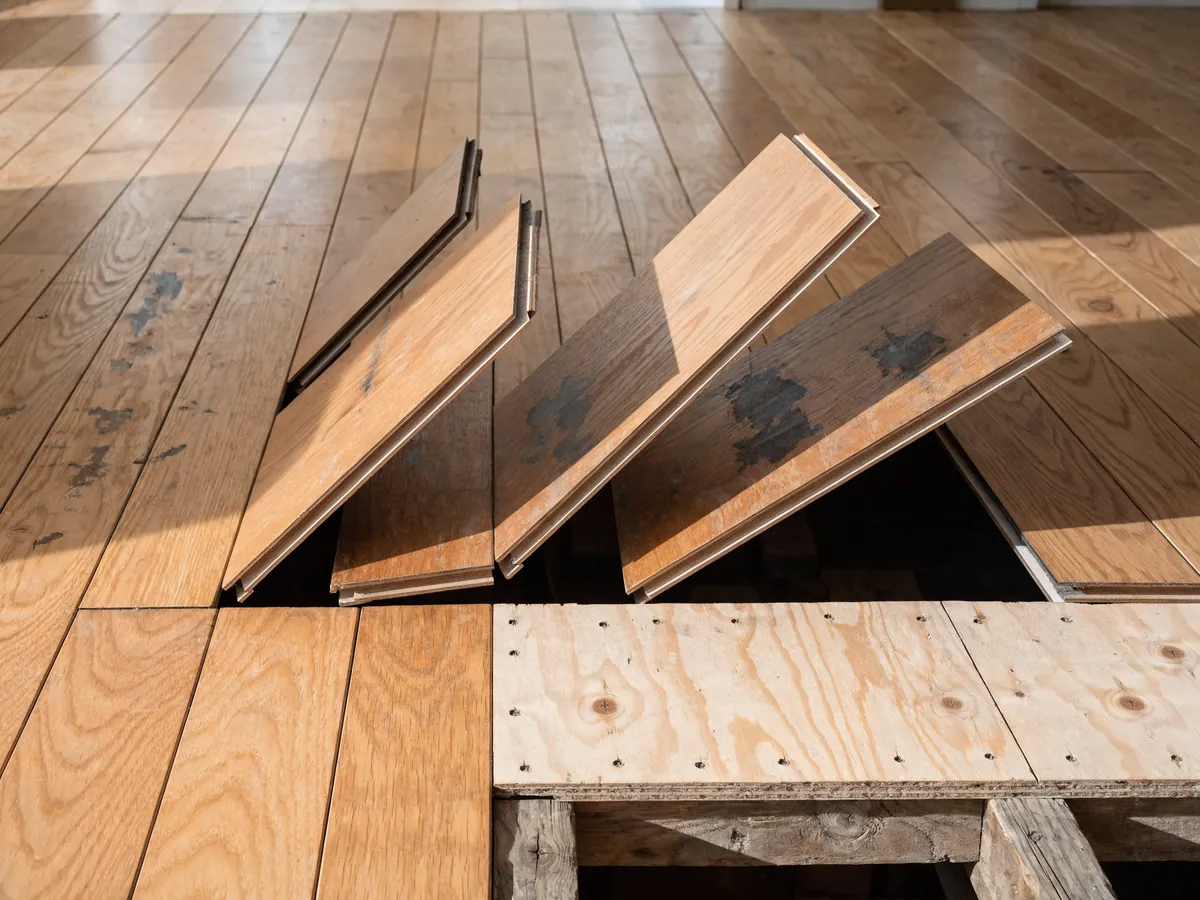
Accurate diagnosis determines whether a repair holds or fails again within a year, and the categories below behave differently and demand genuinely different remediation. We identify which one you have before discussing any pricing whatsoever.
Water Damage and Moisture Intrusion
Water damage presents as cupping, crowning, buckling, or a soft area underfoot depending on severity. Cupped boards indicate moisture entering from beneath, usually through a crawl space or slab. Crowning indicates the opposite, where the surface absorbed moisture the underside did not.
We take moisture readings throughout the affected area and well beyond its visible boundary. Deterioration extends considerably further than the staining suggests, particularly across a wood subfloor. Establishing the actual extent prevents remediating half a problem at full price.
Subfloor and Structural Deterioration
Deteriorated decking is the most common structural problem we encounter beneath a failing floor, because plywood delaminates once saturated and never recovers its original strength. That section gets cut out entirely and replaced rather than dried and covered again.
Joist deterioration is considerably more serious and appears in older crawl space properties. Sistering a compromised joist restores the load path without replacing the entire member. We inspect the framing whenever a subfloor comes up rather than assuming it is sound.
Wear, Scratching, and Surface Damage
Surface deterioration is worth distinguishing from structural deterioration before anybody quotes anything. Scratching, dulling, and traffic patterns are finish problems rather than timber problems, and they do not mean the floor has failed. We will tell you plainly when a floor does not need replacing.
Resilient and laminate flooring cannot be resurfaced, so surface deterioration there means plank replacement. Individual planks lift and replace where the assembly is glue-down or where clicked planks can be unlocked, and retained attic stock is what makes that repair invisible.
Failed Installations and Movement
Buckling, peaking, and separated seams in a floating floor almost always indicate an installation fault. A missing perimeter expansion gap prevents seasonal movement and the field lifts under compression, so correcting it means trimming the perimeter rather than replacing the flooring.
Hollow spots and cracked grout in tile indicate inadequate mortar coverage or substrate deflection, and neither is repairable by regrouting whatever appearances suggest. We establish which one applies before proposing anything, because the remedies differ completely.
Our Repair and Replacement Process
Every repair begins with diagnosis rather than a quotation, because pricing an undiagnosed problem serves nobody. The sequence below is what separates a permanent remediation from a temporary cosmetic improvement. It applies equally to a single room and a whole property.
Assessment and Moisture Diagnosis
We inspect the affected area, take moisture readings, and establish where the water originated. A repair completed without eliminating the source will fail again within a single season. Occasionally the genuine remedy is plumbing or drainage rather than flooring entirely.
We then map the actual extent, which routinely exceeds what is visible at the surface. Readings are taken well beyond the staining and into apparently unaffected areas. That assessment is free and it determines everything that follows afterward.
Drying, Removal, and Substrate Repair
Affected flooring is lifted and the structure underneath is dried properly before anything else proceeds. Covering a substrate that still carries moisture guarantees the identical failure returns. We verify with readings rather than judging by appearance or elapsed time.
Deteriorated decking is cut back to sound material and replaced with matching thickness. Loose panels are refastened and any compromised framing is addressed while genuinely accessible. This stage is invisible afterward and it determines whether the repair holds.
Material Matching and Reinstatement
Matching existing flooring is the hardest part of any partial replacement we undertake. Manufacturers discontinue product lines constantly and dye lots shift between production runs. Retained attic stock resolves this instantly, which is why we always recommend keeping some.
Where matching proves impossible we discuss honest alternatives rather than installing an obvious patch. Running new flooring to a natural break such as a doorway frequently reads better. Occasionally replacing a whole room is genuinely the more sensible expenditure.
Why Savannah Flooring Company Is the Best Floor Repair and Replacement Expert
Local Expertise in Savannah, GA
Coastal properties see water damage that inland construction simply does not experience. Storm intrusion, elevated crawl space humidity, and flood zone exposure all produce distinctive failure patterns. We have diagnosed these across Chatham County for over 50 years and recognize them quickly.
Professional Installers
Repair work demands diagnosis before installation skill, and the two are genuinely different competencies. Identifying whether cupping originates above or below the boards determines the entire remediation. The same crew assesses and completes your repair without any subcontracted labor.
Commitment to Customer Satisfaction
The assessment is free and includes actual moisture readings rather than a visual opinion. You receive one written figure covering removal, drying, substrate repair, material, and reinstatement. We tell you honestly when a repair is sufficient and when replacement is genuinely better value.
Frequently Asked Questions About Floor Repair and Replacement
Subfloor repair generally runs 3 to 10 dollars per square foot of affected area, depending on access and the extent of deterioration. Crawl space work sits at the upper end because conditions are harder. Individual board or plank replacement is usually quoted per job rather than per foot. Full room replacement prices as a new installation. The damage assessment is free and includes moisture readings.
It depends entirely on what the moisture readings show and how far the deterioration extends. Solid hardwood that has cupped will frequently flatten once the source is eliminated and the structure dries fully. Laminate is not recoverable, because the fiberboard core swells irreversibly. Delaminated plywood decking always gets cut out and replaced rather than dried and covered again.
Cupping means the board edges sit higher than the centers, and it indicates moisture entering from beneath. The usual sources are a damp crawl space, a slab without an adequate vapor barrier, or a slow leak. Crowning is the reverse and indicates surface moisture instead. We take readings above and below the floor to establish which, because the remedies are completely different.
Sometimes, and it is the hardest part of any partial replacement. Manufacturers discontinue product lines constantly and dye lots shift between production runs, so an exact match is not always available. Retained attic stock resolves it immediately. Where matching is impossible we discuss honest alternatives, such as running new flooring to a natural break at a doorway rather than installing a visible patch.
A single board or plank replacement is usually a few hours. Subfloor repair after water damage takes considerably longer, because the structure has to dry properly before anything is covered. That drying commonly runs three to five days depending on saturation and ventilation. We verify with moisture readings rather than elapsed time, then reinstate. Rushing the drying stage guarantees a repeat failure.
Something wrong with your floor? We will diagnose it before quoting.
912-330-6990